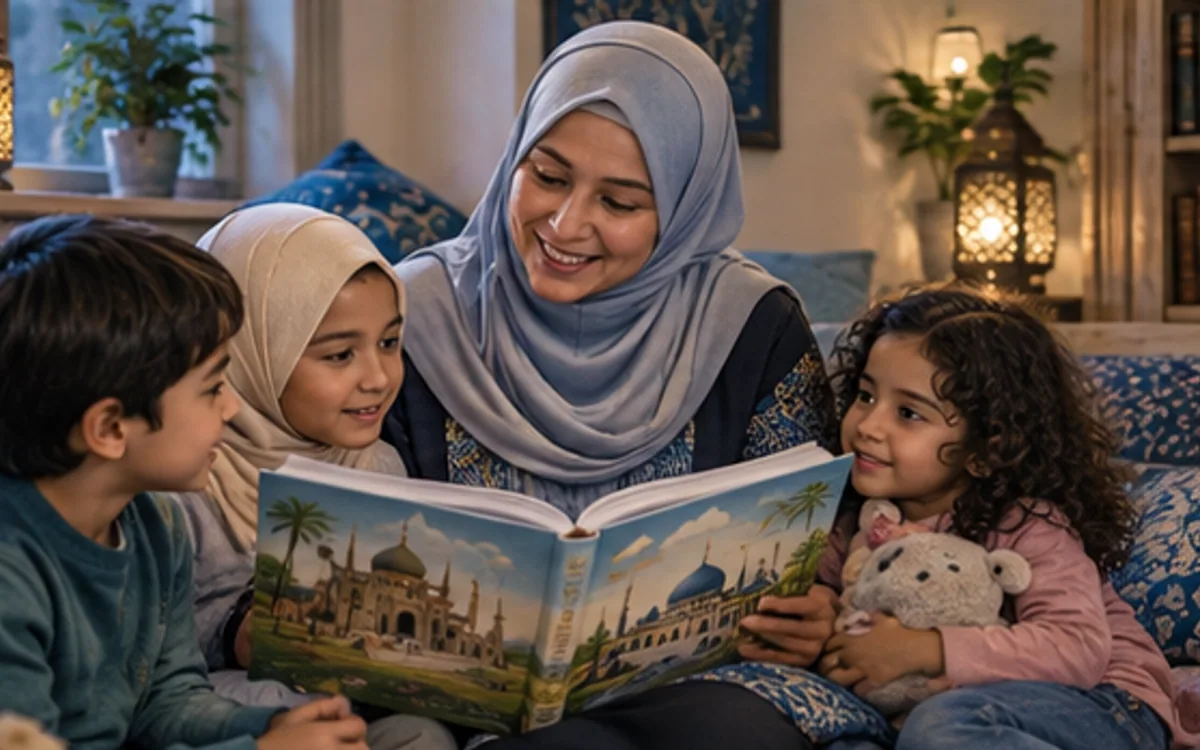


Stories can open conversations about values when readers know which accounts are sourced history, family experiences, or educational fiction.
Overview
A child hearing a story about a lost object can imagine the character's choices. Why should it be returned? How might the owner feel? What would the child do in a similar situation? A story offers a concrete setting for discussing values.
An effective story does not need a moral instruction in every sentence. Give listeners room to recognize the problem and express a view. The conversation afterwards can matter as much as the story itself.
Explain what kind of story it is
When using a Qur'anic account or a report about the Prophet, consult sources that can be checked. Do not add dialogue, names, or incidents and present them as part of the original report. Simpler language should preserve meaning and the limits of the available information.
For educational fiction, state clearly that the characters are invented. You can create everyday situations, but do not attribute imagined statements to Allah, the Prophet, or historical figures as facts.
Family stories offer a different kind of value. A grandparent's or mother's experience can teach perseverance without becoming religious evidence. Explain who experienced it and which details are remembered or uncertain.
Tell stories responsibly
Qur'an 12:3 describes the best of stories being related through Qur'anic revelation. The verse draws attention to stories in learning while preserving the distinction between revelation and human-made narratives.
Sahih al-Bukhari 3461 includes an instruction to convey the Prophet's teachings and a serious warning against falsely attributing words to him. Its mention of narrating from the Children of Israel should not be used as permission to accept every popular account without verification.
Invite the listener to think
Afterwards, ask which decision was hardest for the character and what its consequences might be. Avoid questions that demand only one memorized answer. Children can create an alternative ending to a fictional story and discuss whether the actions are fair.
Storyteller Asma and Sister Aminah in Muslim AI can accompany conversations about stories and learning values. Review the material before sharing it with children, especially when a response names a historical figure or religious source.
Try: "Create a fictional story about a child who finds a classmate's belongings. Do not invent religious quotations. End with discussion questions." Clear boundaries allow storytelling to remain creative and responsible.

Explore Muslim AI Companions
Continue reflection with the Muslim AI companion catalog.