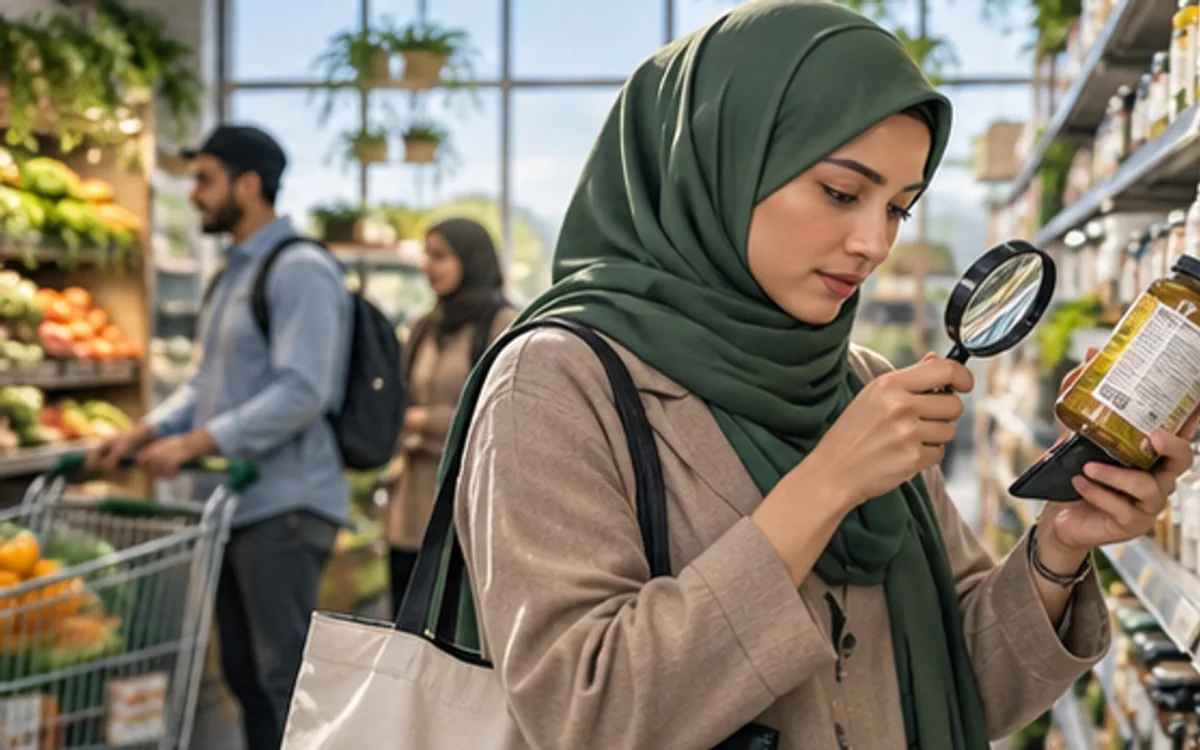


Technology can help explain questions about food, while conclusions about halal status still require appropriate evidence and sources.
Overview
When encountering a new product, we may recognize some ingredients and hesitate over others. A digital search can provide an initial explanation. However, a product name, packaging photograph, or single ingredient is not always enough to establish the halal status of the entire product.
Halal information concerns a particular product, its composition, its processes, and relevant evidence. Digital tools are most useful when they help us identify what needs checking, rather than assert certainty without a clear basis.
Start with the correct product details
Match the name, variety, manufacturer, and country of origin. Similarly branded products may have different compositions. If packaging displays certification, check through the issuing body's official channel or the relevant authority. Do not rely on a logo image circulating without context.
If an ingredient is unfamiliar, investigate its possible sources and purpose. A term may require further information from the manufacturer. "It can come from several sources" calls for follow-up rather than an immediate definitive conclusion.
For prepared food, politely ask relevant questions about ingredients and preparation. If information remains insufficient, acknowledge that the status cannot be established from the available details. An information gap does not automatically justify an accusation against the seller.
Attend to what is lawful and good
Qur'an 2:168 directs people to eat what is lawful and good from the earth. Its summarized meaning underpins Muslim attention to food choices; it does not establish the status of a specific product.
Sahih Muslim 1015 states that Allah is good and accepts what is good, and connects unlawful consumption with the question of a supplication's acceptance. Its message encourages care over consumption and livelihood. Applying it to a specific case requires sufficient information and guidance.
Use AI to organize your checks
Halal Check in the Muslim AI ecosystem is positioned as a halal food information assistant. Use it to understand terminology and prepare follow-up questions. Do not treat an AI response as a certificate, a fatwa, or a replacement for confirmation from an authorized body.
Try: "Explain these ingredient terms without immediately deciding their halal status. What information should I request from the manufacturer?" Avoid uploading unnecessary personal information, such as an address on a receipt.
Better-informed decisions begin with a willingness to check and acknowledge the limits of what is known. Technology can help organize the steps, while appropriate sources provide the basis for a conclusion.

Explore Muslim AI Companions
Continue reflection with the Muslim AI companion catalog.